
Default Energy Service Disasters Looming
A warning to all residential electric customers of Unitil, Liberty, and Eversource

‘Tis the season for residential electric customers in New Hampshire — all of them — to be keeping a sharp eye on their electric rates. Your monthly bill could easily increase in drastic fashion, or you could be deprived of opportunities to save a lot of money, depending on what goes down over the next few weeks.
It is a complicated and confusing mess. In the world I wish I lived in, savings would be automatic. In this world, the default energy service rates of all three of the state’s investor-owned utilities (Eversource, Liberty, and Unitil) will change effective on August 1. The new rates for this backstop electric service, available to all who do not choose a different supplier for their electricity, will be good for six months (through January 31, 2027).
You may or may not be relying on default energy service right now. If you live in one of the 70 or so municipalities that are part of the Community Power Coalition of New Hampshire (CPCNH), chances are you are not on default energy service but CPCNH’s basic energy service rate, currently 14.66 cents per kilowatt-hour in Eversource’s service territory, 14.94 cents in Unitil’s, and 14.64 cents in Liberty’s. As of now, these basic rates are all significantly higher than the default energy service rates being offered by the utilities.
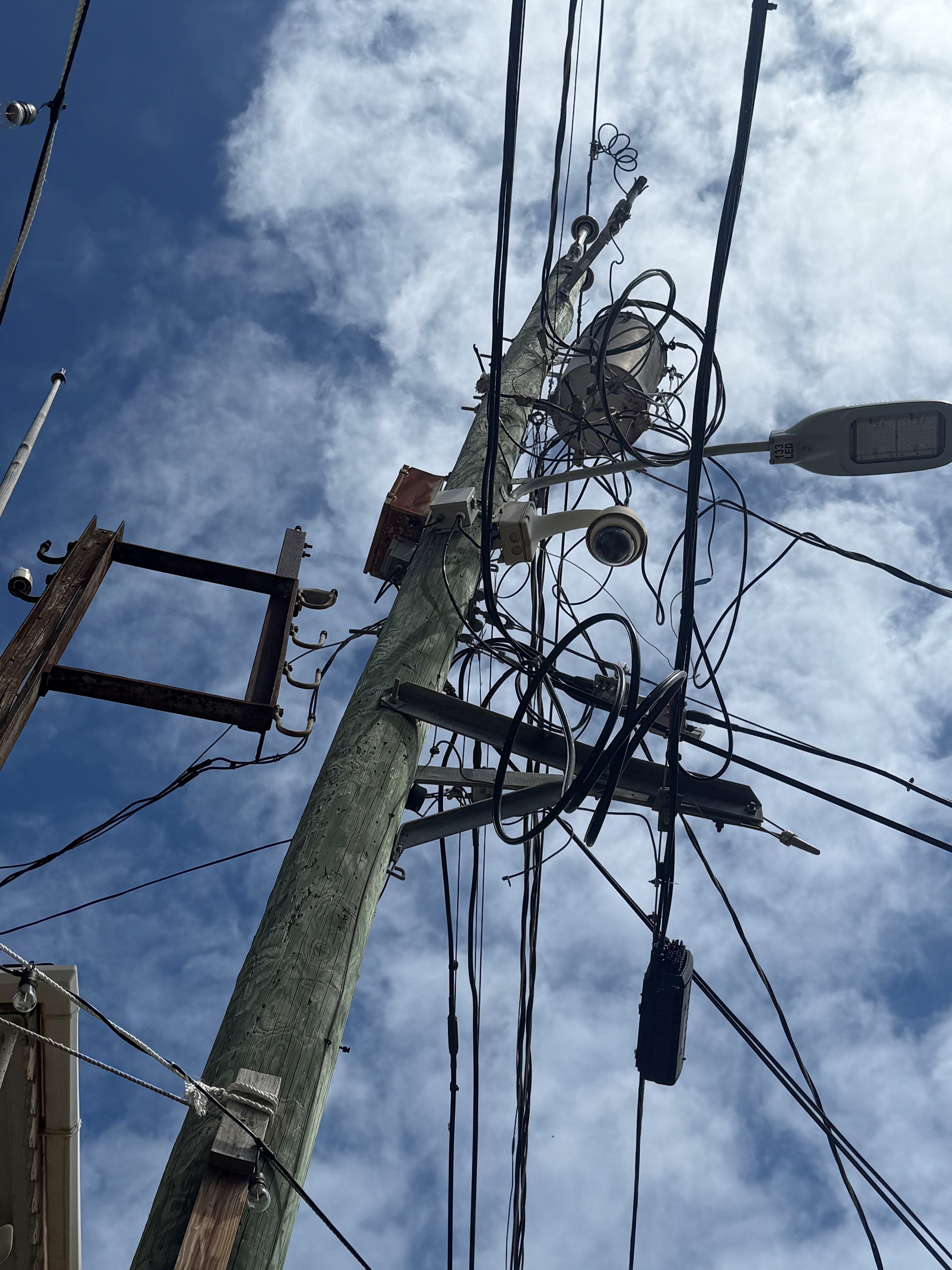
But here’s the thing: That’s all about to change. The first shoe dropped today, with the approval of the Public Utilities Commission (PUC) of Unitil’s proposed contract with Hydro Quebec (one of the region’s big three suppliers of wholesale electricity) for half of its default energy service needs for the upcoming six-month period. In the ordinary course, the PUC’s order would also have approved a new default energy service rates — but everything associated with default energy service is a hot mess right now. Thanks to the eternal wrangling over how to cost out the other half of default energy service — the half the PUC has ordered utilities to buy from the highly volatile “spot” energy market administered by regional grid operator ISO New England — we won’t know the new rates until the utility makes an additional filing and the PUC reviews it.
The hope is to have all of that done by next week— the good news being that it looks like customers in the Unitil territory will have lots of time to decide which of the new rates is best for them. The Board of CPCNH meets on June 26, with plans to approve new rates for those relying on CPCNH on that date.
It appears that when the dust settles, Until’s new default energy service rate will be 14.35 cents per kilowatt-hour — significantly higher than the company’s current rate of $12.06 cents or (to offer the most salient comparison) the rate that went into effect last August 1 of 11.78 cents. It’s still lower than the current CPCNH rate — but customers cannot and should not assume that Unitil will be cheaper than CPCNH once the community power organization adopts new rates on June 26.
Why is Unitil’s new default energy service rate so damned expensive? Blame the effects of the very cold and snowy winter we just experienced (since the wholesale market players who looking ahead get spooked by what they see in their rear view mirror) and of course the effects of the current chaos in global energy markets brought on by the situation in Iran and the Strait of Hormuz. Because New England remains highly dependent on natural gas and (during wintry months like December and January in the upcoming rate periods) fuel oil, the price of our electricity supply is highly vulnerable to the global situation.
Meanwhile, get a load of what Liberty just filed with the PUC — a plan to increase its default energy service rate to a ginormous $21.13 cents per kilowatt-hour. That, according to the company’s filing, will increase the monthly bill of a typical Liberty residential customer by more than 25 percent, all in one fell swoop. Right now the Liberty default energy service rate is 13.74 cents; on August 1 of a year ago it was 12.42 cents.
WTF?1 The winning bidder for half of Liberty’s default energy service was another of the big three wholesale suppliers, Constellation.2 But you can’t blame Constellation for this mess. Rather, Liberty’s default energy service rate increase is driven in significant part by a need to make up a shortfall from previous default energy service periods, when rates were not adequate to cover Liberty’s actual costs in the volatile spot market where half of default energy service is ultimately procured. This is similar to — indeed, it’s fair to say it’s actually identical to — the mess that prompted CPCNH to charge premium rates well in excess of what the utilities have been offering. The PUC is conducting a hearing on Liberty’s proposed rates on June 16.
What about Eversource, you ask? They haven’t filed their proposed default energy service rates yet — we expect those next week, in advance of a PUC hearing scheduled for June 23.
Here’s a few other issues to throw into the mix. Some communities — Londonderry, Merrimack, Keene, Hampton, Hampstead, Salem, Windham, and Laconia among them — are running community power aggregation programs without joining CPCNH. These communities rely on agreements with individual energy brokers, the most energetic of which seems to be Freedom Energy Logistics. For example, thanks to Freedom Energy Logistics residential customers in Londonderry can buy community power at a highly attractive rate of 9.6 cents per kilowatt-hour — and, unlike the CPCNH rates, Londonderry’s default energy service rate will not change on August 1. However, that 9.6 cent rate expires on October 31, just in time for the annual spike in wholesale market prices better known as “winter.” The same Freedom Energy Logistics deal, with a slightly higher rate (9.7 cents) applies in Merrimack.
Once upon a time, I used to urge policymakers and Granite Staters in general to work toward having an electric industry in which residential customers could simply turn on their power and rely on trusted agents to make sure they got the best deals. I thought it was foolish to craft energy policy around the idea that every individual customer would have to be a vigilant rate-watcher. Most people are too busy for that — they’re working, raising families, enjoying their retirements, etc. But I have decided to admit that I have lost this battle.
There is simply too much complexity and too much friction for people who want to switch on or off of utility default energy service. Why is it like this? Because it is in the best interests of everyone — suppliers, utilities, community power programs — to do it that way . . . everyone, that is, except the customers themselves.
“WTF?” is an abbreviation of “Why These Fees?,” a term of art in the electric industry.
What’s the other member of the Big Three, you ask? That would be NextEra, owner of the Seabrook nuclear power plant and a bunch of other generation assets plus utility subsidiaries outside of New Hampshire. NextEra has announced plans to buy up Dominion and become the nation’s energy behemoth.
Thanks as ever for an educational post. Here is a link to a semi-related story that mentions NextEra:
https://theconversation.com/how-wall-street-is-shifting-electric-utilities-toward-consolidation-and-profit-284147
Robert Searle